ElvisEdem
Online advertising is evolving. As we transition into the new year, the focus has shifted from experimentation to execution. Recent years have posed the question, “Can we achieve it?” covering topics like generative AI, cookie depreciation, retail media networks (RMNs), shoppable video, and immersive experiences. Now, the crucial inquiry is: “Are we actually implementing these strategies effectively?”
I will highlight the top 10 online advertising trends that savvy marketers should adopt by 2027. These trends go beyond mere buzzwords; they signify substantial changes in consumer behavior, platform functionality, and the necessity for marketers to fuse strategy across data, media, and creativity.
Here’s what to expect: The rise of conversational search reshaping SEO; video transforming into commerce; a privacy-centric approach elevating data ownership as a competitive advantage; retail media networks transitioning from niche to mainstream; community-driven co-creation; AI becoming the backbone of marketing; measurement evolving as traditional attribution falters; gamification and immersive experiences emerging; and, importantly, the human element talent and culture determining success.
Let’s break down these, digital marketing trends.
1. Conversational Search Redefines Online Advertising SEO
The landscape of search is rapidly changing from keyword-focused inquiries to conversational ones. It is moving away from clicks for information, focusing on getting answers directly from search engines. With platforms like Google (featuring AI-driven summaries) and Bing Copilot, the concept of visibility is being reevaluated.
Search Everywhere Optimization engaging audiences where they explore content related to your topic is now essential.
From a statistical perspective, the digital marketing industry anticipates a growth rate of roughly 13.9% CAGR in the coming years.
For SEO professionals: Transition from crafting pages aimed solely at keyword rankings to producing authoritative, answer-centric content structured with schema. This content should be tailored for featured snippets, digital assistants, and generative AI responses. Expect more scenarios where users find answers without visiting your site.
Online Advertising Takeaway: Optimize for user intent, design for conversational and multimodal search, and assess results beyond clicks (such as brand awareness and FAQ visibility).
2. The Video-Commerce Boom as part of online advertising trends
The integration of short-form videos, live video, and interactive formats is now fully underway. Social media channels previously used video for engagement; they are now utilizing it for transactions.
Alongside this, revenues from social commerce are increasing through channels like live shopping and shoppable posts.
For brands, it’s key to see video not merely as storytelling but as a direct route to purchase. This involves integrating interactive features, product overlays, live shopping functions, and partnerships with e-commerce platforms. Measurement should focus on actions taken (like add-to-cart and checkout) instead of superficial metrics (views and likes).
Takeaway: Transition video from a tool for brand engagement to one for commerce engagement. Create video content with built-in purchase prompts and establish comprehensive measurement metrics.
3. The Privacy-First Data Revolution
With the decline of third-party cookies, stringent regulations, and increased consumer sensitivity to data privacy, prioritize your internal resources. Your first-party data, consent-based profiling, and robust data architecture will become your main competitive advantage.
WPP Media recently predicted that global digital advertising could surpass $1 trillion in 2025, with digital channels accounting for 73.2% of total ad revenue. Additionally, EMARKETER forecasts that, by May 2025, U.S. advertisers might dedicate 66% of their digital budget to mobile.
This shift highlights that reliance on third-party data or open-web cookies for targeting can leave you vulnerable. Businesses must construct a “data spine”—comprising consent capture, a reliable customer data platform (CDP), and identity resolution—to integrate both online and offline insights.
Takeaway: Establish first-party data and measurement architecture as cornerstones of your 2026 strategy; without these, your media spend and optimization will deteriorate rapidly.
4. Retail Media Networks Go Mainstream
Initially exclusive to major e-commerce giants, retail media networks (RMNs) are now becoming integral to brand media strategies. With first-party purchase data and premium placements, they create a rare full-funnel channel connecting exposure, consideration, and conversion to specific product outcomes.
Marketers must view RMNs as essential, rather than simply supplementary or tactical. Comprehensive planning and dedicated measurement are required to maximize returns. If treated as an afterthought, brands risk falling behind those already investing in their internal capabilities.
Takeaway: Develop your RMN strategy now. Integrate product data, media planning, and measurement, ensuring alignment with e-commerce and product teams for optimal ROI.
5. The Creator Economy Evolves Into Co-Creation
Influencer marketing has matured significantly. By 2027, the focus will shift from merely compensating creators for posts to partnerships where creators co-develop products and campaigns.
Research suggests that influencer marketing continues to hold importance, but the landscape is leaning towards deeper collaborations and ownership of creative direction. Brands will increasingly engage creators in product development, limited editions, or campaign strategy, enhancing authenticity and niche connectivity, ultimately driving better performance than conventional sponsorships.
Takeaway: Transition from viewing influencers as amplifiers to seeing creators as strategic partners. Involve them in product, marketing, and evaluation processes, treating them as co-owners of the brand experience.
6. Community + Authenticity = The New Online Advertising Moat
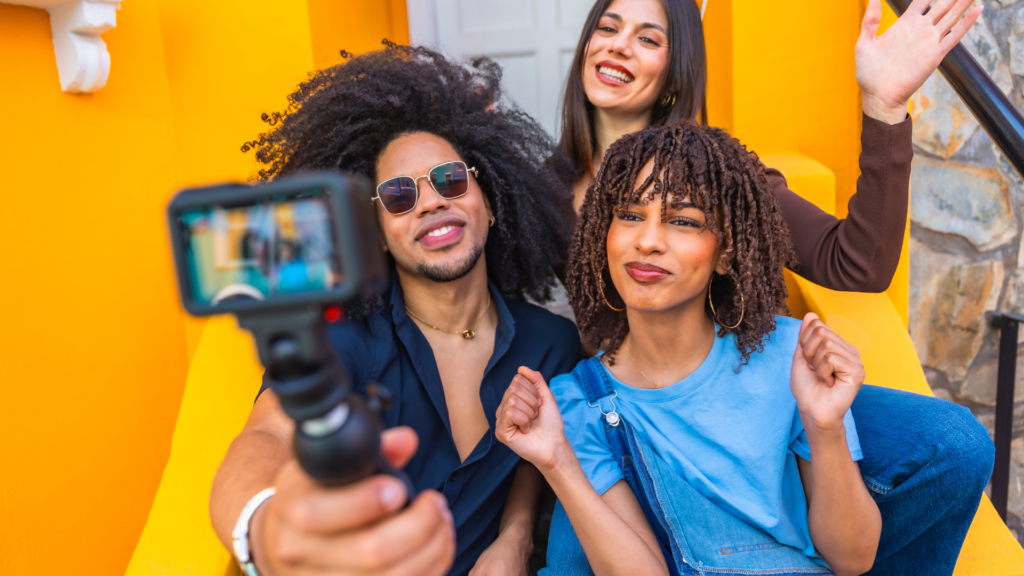
In 2027, consumers desire not only to purchase but to belong. Authenticity is crucial. Therefore, brand engagement must revolve around community, supported by internal voices (employees and leadership) and a genuine brand ethos.
Reports indicate a growing consumer demand for interaction, transparency, and ethical communication from brands.
From an operational perspective, companies will increasingly invest in owned channels (forums, apps, micro-communities), user-generated content, and advocacy led by employees.
Takeaway: Cultivate and support community initiatives; harness internal voices; and quantify authenticity through metrics (engagement, retention, referrals) rather than relying solely on perceptions.
7. AI As The Strategic Operating System for online advertising trends
Often, AI is discussed in creative contexts think generative images and videos. However, a significant development for 2027 is leveraging AI as the main operating system for marketing tasks: analytics, optimization, media purchases, and customer journey automation.
Reuters reports that Meta Platforms plans complete advertising automation using AI by the end of 2026. Brands could soon provide product images and budgets while AI handles ad creation and targeting.
For SEO experts and digital marketers, the pivotal question is transitioning from “Should we employ AI?” to “How do we integrate and scale AI across planning, creativity, measurement, and optimization?” A human-in-the-loop approach becomes vital humans guide strategy, safeguard against biases, and uphold brand integrity while AI automates tasks.
Online Advertising Takeaway: Treat AI as your primary marketing operating system. Structure your workflows, data management, and governance to accommodate this shift; provide necessary training for your teams.
8. Relearning ROI Through Marketing Mix Modeling
As traditional attribution methods struggle under privacy constraints and cross-device complexities, marketing mix modeling (MMM) is regaining its standing as a key framework for measuring business impacts.
EMARKETER statistics suggest that by 2026, programmatic methods may constitute 90% of global digital marketing display ad expenditures. Given these figures, brands must establish robust measurement systems that extend beyond platform-based attribution.
Open-source solutions, such as Meta’s Robyn, are being utilized to connect media investments to business results, like revenue and customer lifetime value. For the upcoming years, focus on refining your MMM engine and ensure it can integrate online, offline, and walled-garden data points.
Takeaway: Invest in MMM infrastructure and synchronize media teams with finance and analytics, reporting marketing efficiency in business metrics (incremental lift, ROI), rather than superficial statistics.
9. Immersive Experiences And Gamification Redefine Engagement
The lines separating entertainment, engagement, and commerce continue to blur. Augmented reality (AR), virtual reality (VR), and gamified campaigns push marketers away from static ads to memorable experiences.
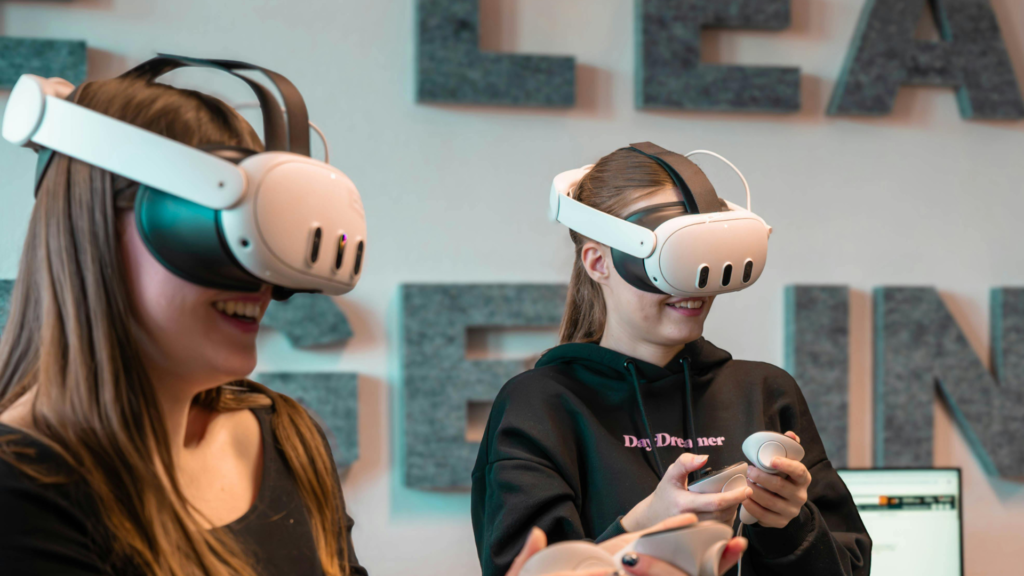
A 2025 survey by Deloitte Insights indicates that large-scale social-video platforms are significantly shifting consumption habits from passive viewing towards interactivity.
For brands, simply displaying product images is insufficient. Successful immersive initiatives will provide real utility (e.g., AR try-ons, gamified product launches, virtual showroom tours) and measurable frameworks, connecting engagement to store visits and transactions.
Takeaway: Allocate resources towards immersive formats and prioritize genuine utility, linking them to conversion metrics rather than just impressive statistics.
10. The Human Edge: Upskilling For An AI Era
The core of these changes lies within your team. While technology advances rapidly, people and culture evolve at a slower pace. Brands that thrive in 2026 will be those investing in education, diverse talent, swift decision-making, and interdisciplinary skills (data, creative, media).
Your mandate for 2027 should focus on fortifying your marketing capabilities around three essentials: data literacy, AI fluency, and cross-channel coordination. Without these, your strategy may seem robust but falter during execution.
Takeaway: Elevate upskilling, talent management, and culture to be as significant as technology and media. Build a team adaptable to rapid changes, continuous learning, and cross-functional collaboration.
Conclusion:
What unifies these trends? Two words: integrated authority. Marketers in 2027 must transcend siloed approaches (search vs. social, media vs. commerce, data vs. creative) to create interconnected systems that provide cohesive experiences. Simultaneously, they should earn authority through first-party data, community trust, creator collaborations, and demonstrable business outcomes.
As you strategize and implement your marketing plans for 2027:
- See media as a channel to drive business results (not merely impressions).
- Treat data as an asset (not just an ingredient).
- Utilize AI as the engine (not merely an experiment).
- Consider measurement as validation (not just reporting).
- Value talent and culture as differentiating factors (not just overhead costs).
Brands and teams mastering this approach will not only keep pace but also set the standards for the next evolution in digital marketing. The key isn’t just selecting which trends to adopt; it’s how well you integrate them into your operations.
So, here’s to 2027 a year where strategic planning transforms into practical execution, complexity simplifies to clarity, and digital marketing genuinely aligns with business goals. While others may panic and claim, “We’re done for,” we will remain committed to evaluating, synthesizing, and addressing the top digital marketing trends, assuring, “We’ve got this.”