ElvisEdem
AI SEO is increasingly important in understanding the contrasting narratives presented by AI companies to consumers versus investors. For professionals in SEO optimization and content, discerning which narrative to follow is crucial for their strategies.
OpenAI emphasizes its technology as a friendly tool helping users decide what to prepare for dinner, while Google portrays a heartwarming vision of families moving into new homes, supported by Gemini. Anthropic positions Claude as a clean, reliable alternative to the myriad of ad-heavy offerings from competitors.
These marketing campaigns highlight a strategic approach: make AI appear relatable, homely, and beneficial before critics raise tougher questions.
For SEO specialists, content creators, and entrepreneurs, the real question becomes: What are these companies actually developing while showcasing sentimental commercials?
Decoding The Advertisements
OpenAI’s marketing leans toward everyday practicality, evident in ads like “Dish” and “Pull Up,” which depict regular individuals seeking assistance with dinner plans or fitness goals, rather than just focusing on enterprise productivity. Google’s Gemini advertisements resonate with emotional milestones, portraying the model as a companion for significant life events. On the other hand, Anthropic’s campaigns even mock the sponsored responses prevalent in competitor platforms, marketing Claude as the principled choice for users wishing to avoid hidden agendas.
These narratives are not only coherent but are carefully crafted to foster consumer trust, which is foundational for enterprise growth.
Understanding What The Products Deliver
Beneath the surface, all three companies are racing to create systems that can autonomously manage intricate professional workflows. This evolution will redefine the role of marketing professionals from executing individual tasks to orchestrating and overseeing autonomous systems that handle these tasks with minimal human input.
This represents a significant transformation. GPT-5.5 is being branded as a project manager capable of developing complete lead funnels strategy, content, and email outreach without needing user prompting. Gemini 3.1 Pro boasts a one-million-token context window, facilitating deep research that humans can’t match, according to its roadmap. Claude Opus 4.7 targets enterprise clients for specialized tasks, such as legal redlining and production-grade code assessments.
OpenAI has developed the GDPval benchmark to evaluate model performance across 44 professions, scoring GPT-5.5 at 84.9%. This metric indicates its capability against human professionals on various tasks, representing a displacement metric rather than a consumer-focused measure.
AI SEO Challenges
The traditional SEO optimization paradigm conducting keyword research, creating content, securing rankings, and generating clicks is being disrupted by these very companies promoting heartwarming advertisements. Google’s AI Overviews, acknowledged by Sundar Pichai to be fueling a 19% surge in Search revenue for Q1 2026, are reshaping the click economy in ways not captured by the marketing narratives. Users are receiving answers without needing to click through to websites, which shifts the competition from traditional rankings to securing mentions in AI-generated summaries. This emerging field is being termed generative engine optimization (GEO).
For content marketers, strategies focused on high-volume content production risk losing effectiveness as AI tools enable rapid and cost-effective output for all players. The competitive edge is transitioning towards authority, entity recognition, and the quality of content that AI systems can easily interpret and credit. Those who mastered technical SEO ahead of their rivals will recognize these evolving dynamics.
Tension Worth Monitoring
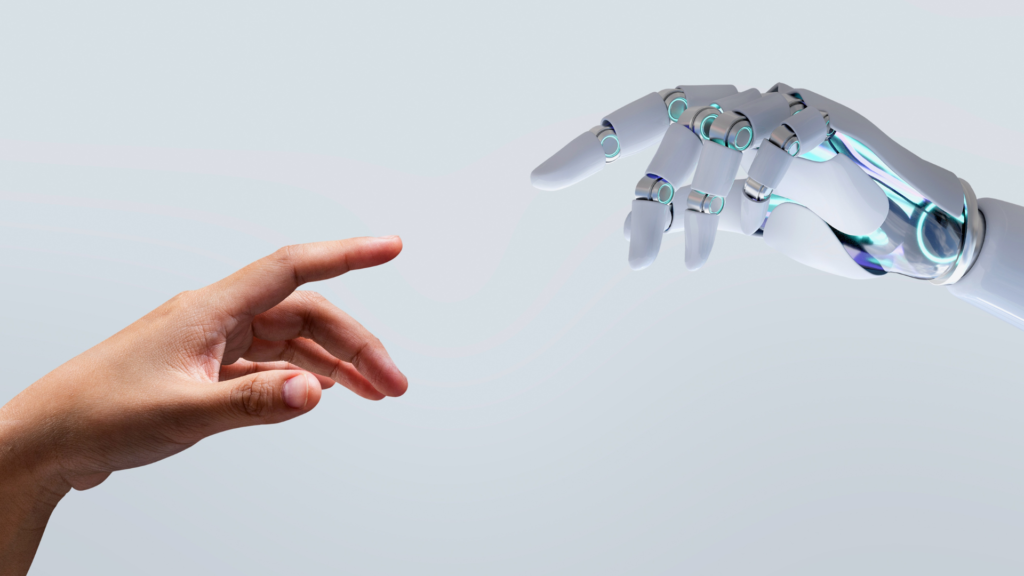
A genuine contradiction exists in the public messaging of these companies. They are asserting to consumers that AI serves as a helpful entity while simultaneously conveying to investors that AI is geared toward automating complex cognitive functions on a large scale. Both assertions hold truth, and the gap between these narratives demands the attention of marketing professionals.
Research from Anthropic indicates that junior engineers who relied heavily on AI coding agents did not complete tasks appreciably faster and exhibited diminished understanding of their work in subsequent evaluations. If this phenomenon extends to SEO and content strategy, the industry may face an erosion of essential skills, which the “AI as partner” narrative fails to address.
The creators of these technologies have vested interests in fostering an endearing consumer narrative while promoting a promising enterprise outlook to investors. As professionals, your focus should be on tracking actual trends impacting your website traffic, conversion metrics, citation share, and the development of your team’s capabilities, making informed decisions rooted in data rather than marketing claims.
The dream these companies project is enticing. Nonetheless, be sure to ground your insights in reality.