ElvisEdem
AI optimization is becoming a hot topic for many businesses that are weighing the merits of traditional SEO against AI SEO. At first glance, AI SEO and traditional SEO might appear quite similar. However, in practice, they differ significantly.
This guide will explore:
– How AI SEO Distinctly Differs from Traditional SEO
– Should You Transition from Traditional SEO to AI SEO to Cut Costs?
– Why Doesn’t Traditional SEO Enhance AI Search Visibility?
– Why Doesn’t My Current SEO Strategy Yield Results for AI Search?
– Which Should You Invest in: AI SEO or Traditional SEO?
How AI SEO Differs from Traditional SEO
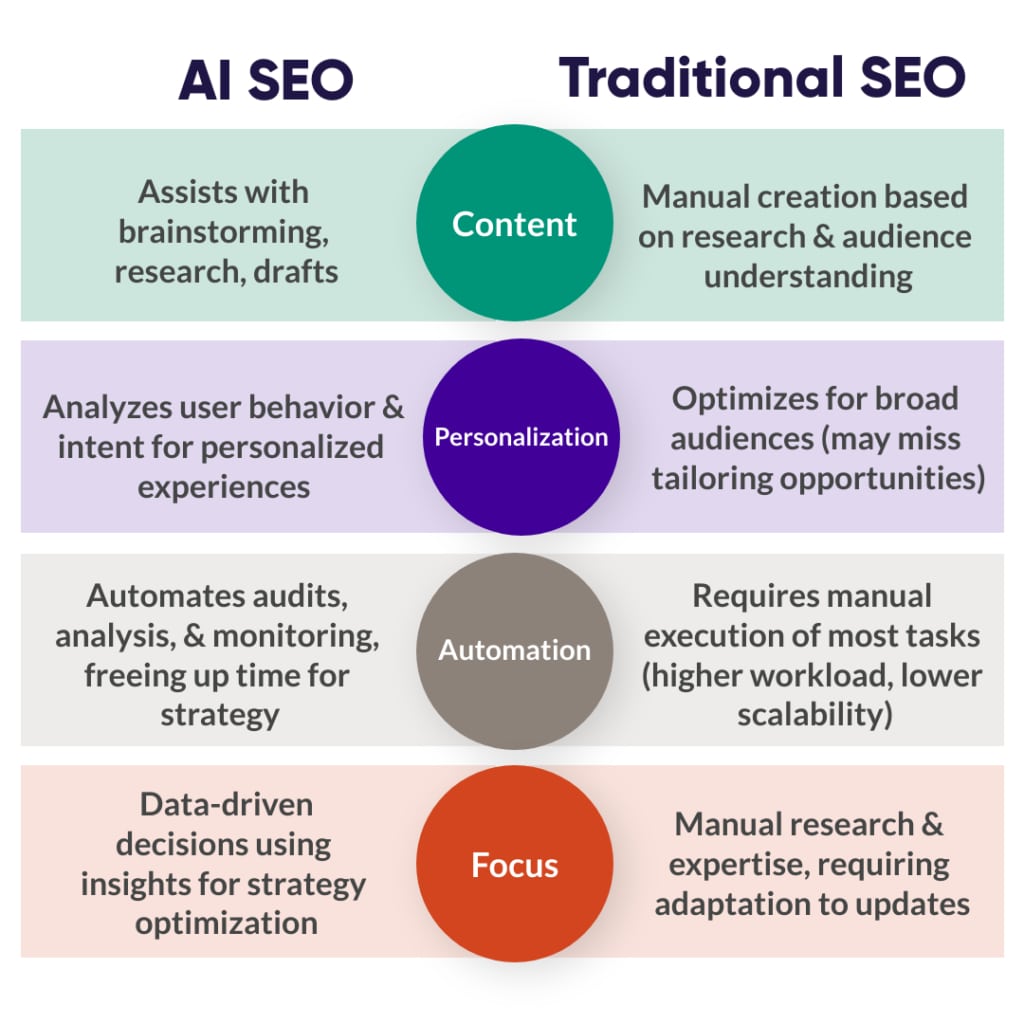
AI optimization and traditional SEO have areas of overlap, yet they possess distinct differences:
1. Goals
Traditional SEO aims for keyword rankings, increased traffic, and more clicks. Conversely, AI SEO emphasizes brand mentions, visibility, and citations.
In traditional SEO, the primary focus rests on optimizing keywords and achieving high rankings. It also concentrates on driving traffic to those pages.
In contrast, AI search behavior often leads to what is termed ‘clickless’ interactions. This shift prioritizes getting your brand in front of searchers, rather than strictly focusing on rankings. In AI search, being the first or third source can yield similar perceived value. Due to the different structures of AI search entities, the goals diverge.
2. Search Behavior
Traditional SEO typically leans on keyword phrases that are three or more words long, such as “how to change a wiper blade.”
AI SEO, however, is characterized by users posing full questions or prompts, indicative of more conversational search behavior. Instead of simply asking, “how to change a wiper blade,” they might inquire, “How do I change my wiper blade on the driver’s side of my car?”
3. Authority Signals
In the traditional SEO realm, backlinks are crucial ranking signals, factoring in their quantity, quality, and origin.
While AI SEO also recognizes the importance of backlinks, brand mentions—both linked and unlinked—play a significant role in establishing authority and citations.
In the context of AI search, if your brand is frequently discussed online, AI systems are more likely to feature your content over competitors with a lesser online presence.
Should You Switch from Traditional SEO to AI SEO to Cut Costs?
Absolutely not. Traditional SEO and AI optimization are distinct strategies with their own methodologies and cannot replace one another.
Why Doesn’t Traditional SEO Enhance AI Search Visibility?
Components of traditional SEO, such as technical aspects (schema markup, site architecture), E-E-A-T signals, and structured content, do positively influence AI search outcomes. A robust SEO foundation can lead to success in AI SEO strategies.
Why Doesn’t My Current SEO Strategy Yield Results for AI Search?
While traditional SEO zeros in on keyword targeting, rankings, and clicks, AI SEO shifts the focus toward visibility, citations, and brand mentions. Thus, relying solely on traditional SEO won’t optimize your strategy for AI search results.
It’s crucial to integrate an AI SEO strategy that complements your existing traditional SEO efforts to thrive in AI search environments.
Which Should You Invest in: AI SEO or Traditional SEO?
The ideal approach is to invest in both. Each serves its unique purpose; focusing on just one can limit your visibility and reach. To secure a spot in both AI and traditional search results, it’s essential to allocate resources to AI SEO alongside traditional SEO tactics.
Conclusion: It’s Not AI SEO vs. Traditional SEO, but AI SEO and Traditional SEO
Both AI SEO and traditional SEO are distinct yet equally vital for optimal search presence. Use them together to reach your audience across various search platforms.